NVIDIA Cosmos 3: the open-source model teaching machines to understand the physical world
NVIDIA introduced Cosmos 3, an open vision model designed for robots, autonomous vehicles, and industrial systems to build real-world representations that allow them to plan and act safely.
Key Takeaways
Cosmos 3 is open-source and can be adapted to specific use cases
The model builds 3D environment representations from video, not just image classification
Improves robot motion planning by 45% over previous methods
NVIDIA positions it as the foundation for all physical AI: robots, drones, autonomous vehicles
The model understands physical properties like gravity, friction, and collisions
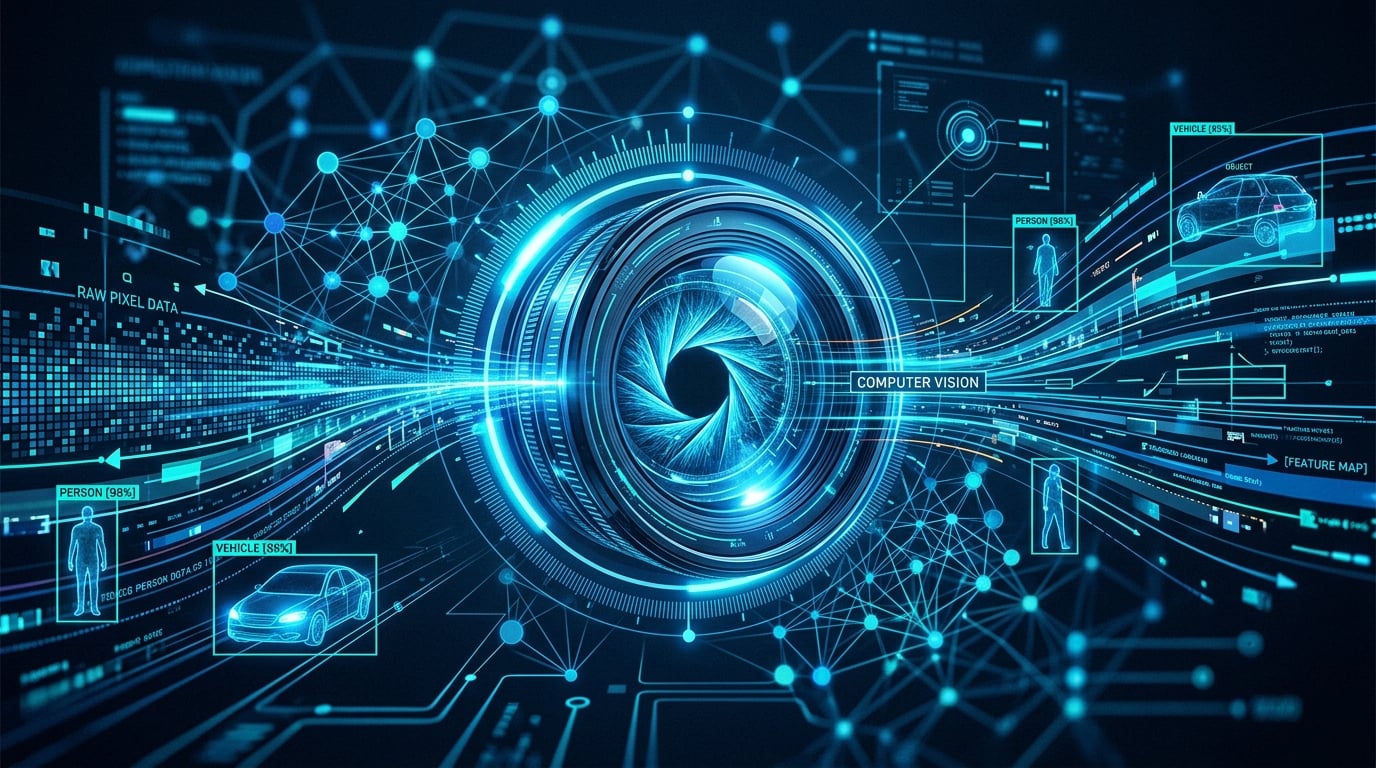
Cosmos 3 is not just another computer vision model. While most vision models specialize in classifying images or generating visual content, Cosmos 3 has a different goal: building an internal representation of the physical world that allows machines to plan real actions.
1What makes Cosmos 3 different?
The fundamental difference is that Cosmos 3 does not just "see" the world; it understands it. While a classification model can tell you there is a table in an image, Cosmos 3 understands:
- Where the table is in 3D space
- What is on the table and roughly how much it weighs
- What would happen if you push an object to the edge of the table
- Where a robot can move without hitting the table
A model that classifies images is an observer. A model that understands the physics of the world is a potential actor.
Learned physical properties
Cosmos 3 demonstrates implicit understanding of fundamental physical properties:
- **Gravity**: Correctly predicts how objects fall
- **Friction**: Understands that a box on a ramp will slide
- **Collisions**: Anticipates what happens when two objects interact
- **Occlusion**: Knows that an object behind another still exists
2Performance and benchmarks
📊 On the RoboNav-2026 benchmark, Cosmos 3 improves motion planning accuracy by 45% over the previous best model. In autonomous navigation, it reduces simulated collision incidents by 67%.
These numbers are impressive, but the real impact lies in real-world applications.
3Practical applications
Autonomous driving
Cosmos 3 can process information from multiple cameras and LiDAR sensors to build a complete representation of the driving environment. This includes predicting the movement of pedestrians, cyclists, and other vehicles.
Industrial robotics
In factories and warehouses, Cosmos 3 enables robots to plan navigation routes that avoid dynamic obstacles (people, forklifts, other robots) in real time.
Inspection drones
For drones inspecting infrastructure (bridges, power towers, solar panels), Cosmos 3 provides the ability to autonomously navigate around complex structures.
Precision agriculture
Agricultural robots can use Cosmos 3 to navigate between crop rows, identify individual plants, and execute precise actions like selective irrigation or weed removal.
4The open-source approach
NVIDIA has made the strategic decision to make Cosmos 3 open-source. This allows:
- The community to adapt the model to specific cases
- Small companies and startups to access cutting-edge technology
- Researchers to use it as a foundation for new breakthroughs
- An ecosystem of tools and applications to be built around the model
💡 NVIDIA's strategy is clear: by making the model open-source, it increases adoption of its GPUs (which are needed to run the model), creating a value flywheel.
5Hardware requirements
Cosmos 3 comes in three variants:
- **Cosmos 3 Lite**: For edge devices with NVIDIA Jetson GPUs
- **Cosmos 3 Standard**: For servers with A100/H100 GPUs
- **Cosmos 3 Ultra**: For data centers with GPU clusters
6The future of physical AI
Cosmos 3 represents an important step in the transition from models that only process digital information (text, images, code) to models that understand and can interact with the physical world. This is the foundation on which the robots and autonomous vehicles of the next decade will be built.