South Korea's $880 Billion Bet on AI and Semiconductors: A Historic National Strategy
South Korea has unveiled an unprecedented national strategy, investing $880 billion in AI, semiconductors, and robotics. This move aims to bolster its position in the competitive global market dominated by the US and China.
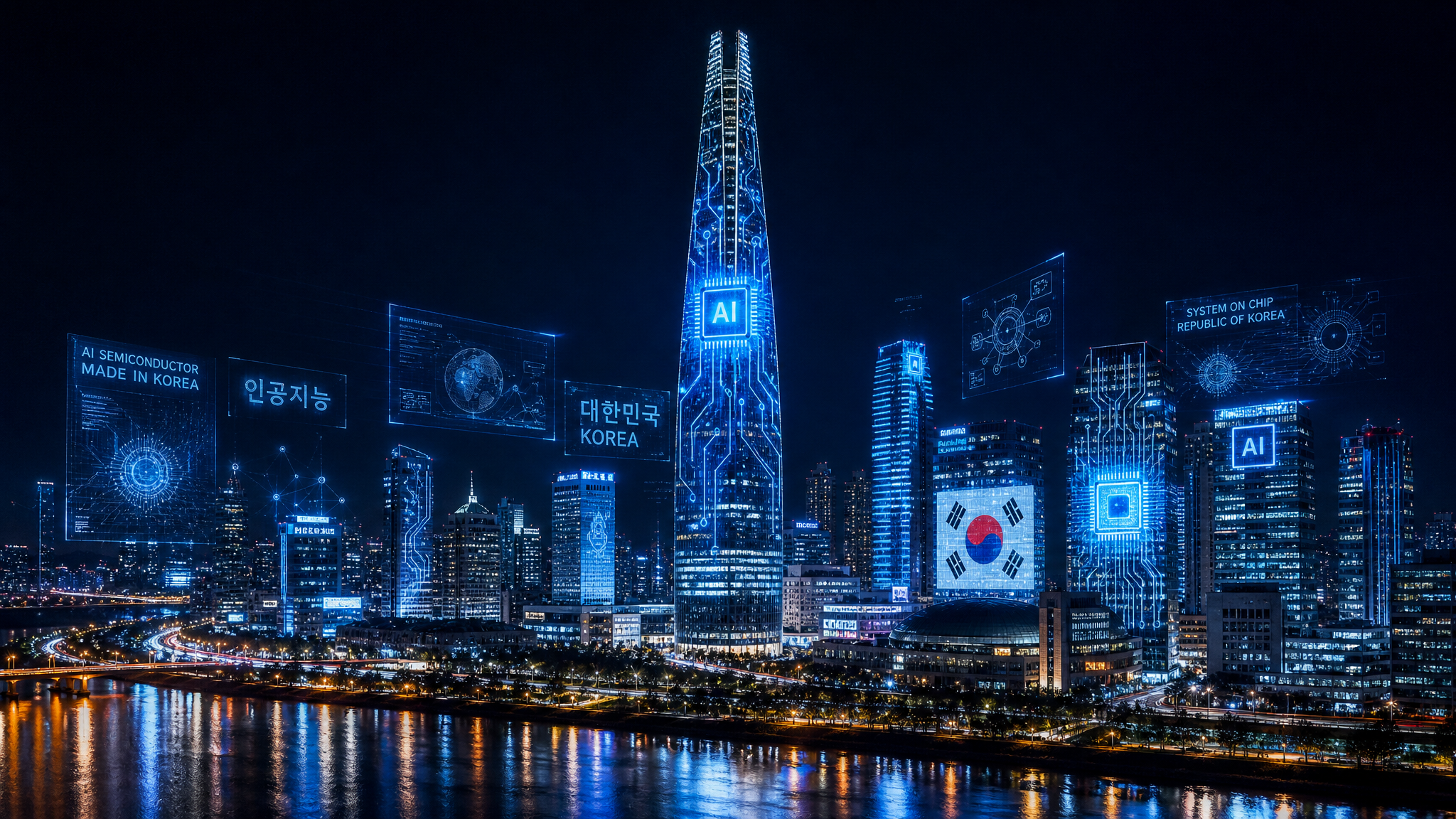
Key Takeaways
South Korea will invest $880 billion in AI, semiconductors, and robotics over the next decade.
90% of global AI computing power is dominated by the US and China.
Samsung and SK Hynix will build four new memory chip plants.
AI data centers aim for 8.4 gigawatts of capacity by 2029.
The strategy aims to decentralize industrial power from Seoul.
1Introduction
On June 29, 2026, South Korea's President Lee Jae Myung announced a historic national strategy to invest at least $880 billion (approximately 1,350 trillion won) over the next decade in semiconductors, artificial intelligence, and robotics. This initiative represents one of the largest AI investment commitments in history.
⚡ The strategy, known as the 'Three Mega Projects', aims to ensure South Korea's survival in the global AI race, currently dominated by the US and China, who possess 90% of the computing power behind leading AI models.
2Strategy Components
- **Semiconductor Manufacturing:** Samsung Electronics and SK Hynix will build four new memory chip fabrication plants in southwestern South Korea, with 800 trillion won committed by the companies and their suppliers.
- **AI Data Centers:** 550 trillion won ($356 billion) is earmarked for AI data centers targeting 8.4 gigawatts of capacity by 2029. SK Group, GS Group, and Naver are contributing to reach 18.4 gigawatts of AI compute capacity by 2035.
- **Robotics:** Samsung is developing humanoid robots in Gumi for education, defense, and disaster response.
📊 This investment not only aims to strengthen the economy but also to decentralize industrial power away from Seoul.
3Challenges and Reactions
While the initiative has been praised for its boldness, it has also faced criticism for possible political bias in project placement. Furthermore, Samsung and SK Hynix shares have faced downward pressure due to the massive capital expenditure required.
🔑 The government plans to fast-track construction permits and infrastructure improvements, potentially cutting project timelines by up to 12 years.
4Global Context
The global AI infrastructure race is intensifying, and South Korea is determined not to be left behind. The US projects a 9-18 gigawatt power shortfall through 2028 due to data center demand.
🎯 This strategic move also carries a socio-economic goal of decentralizing industrial power from Seoul, potentially rebalancing the country's economic development.